If I had a dollar for every time a client walked into the salon on a Tuesday morning—hair looking like a bird’s nest—complaining that their perfect Sunday wash-day had vanished overnight, I’d be retired on a private island. During my nine years behind the reception desk and working alongside some of the best stylists in Sydney, I learned one universal truth: the battle for great hair is won at night, not in the shower.
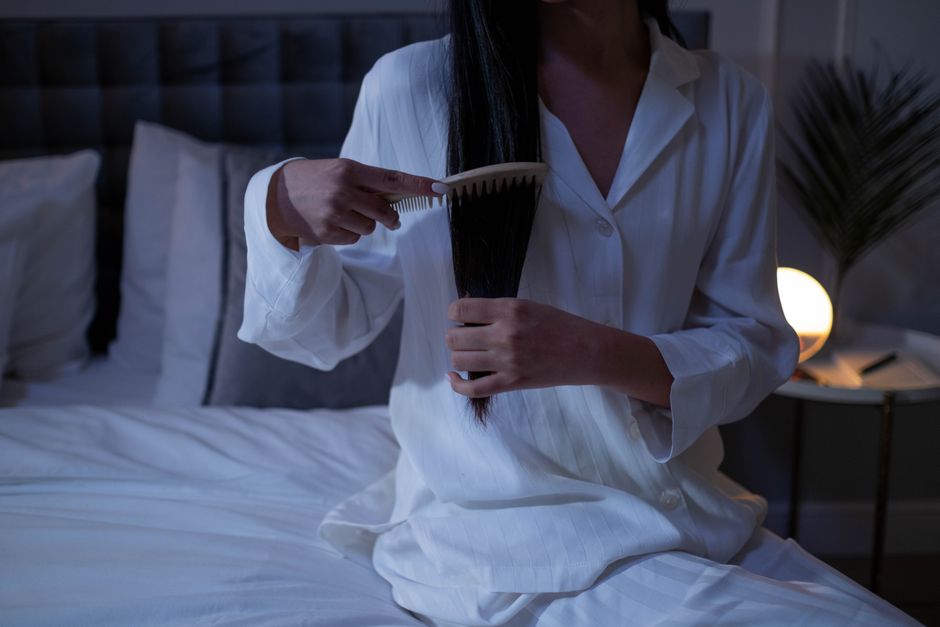
We’ve all seen the viral videos on TikTok and Instagram promising "miracle" curl hacks. Some involve elaborate wrapping techniques that require a degree in architecture, while others suggest sleeping in weird positions that would leave anyone with a sore neck by morning. But as a former salon insider, I’m here to tell you that the simplest methods are almost always the most effective. If you’re struggling with curl preservation and wondering how to wake up with day-two hair that doesn't look like you’ve been electrocuted, you’re in the right place.
The Hidden Enemy: Why Overnight Friction is Ruining Your Pattern
To understand the solution, we first need to identify the villain. For most of us, that villain is our bedding. Specifically, traditional cotton pillowcases.
When you toss and turn at night—and we all do—your hair is constantly rubbing against the fabric of your pillow. Cotton is a porous, slightly abrasive material. It acts like a dry sponge, wicking the natural moisture right out of your strands while simultaneously creating friction. This friction disrupts your curl pattern, causes tangles, and creates that dreaded morning halo of frizz.
Think of your curls as fragile ribbons. If you were to take a ribbon, twist it, and rub it against a piece of rough sandpaper for eight hours straight, what would happen? It would fray. Your hair is doing exactly that while you sleep. By the time you wake up, you aren't just dealing with "flat" hair; you’re dealing with mechanical damage.
Prevention beats repair every single time. It is infinitely easier to protect your curl structure at night than it is to re-wet, re-style, and diffuse it every single morning. That’s why the focus should be on creating a friction-free environment for your hair.
The Silk Solution: Why Material Matters
The beauty industry talks a lot about "silk," but it’s not just a luxury aesthetic choice. Silk is a smooth, protein-based fiber that allows your hair to glide across the surface rather than catching on it. When your hair moves effortlessly, the cuticle stays laid flat. This is the secret to frizz control.
While many brands are popping up, I’ve always been a fan of companies like Silk Bonnet World. They focus specifically on the needs of curly and textured hair, understanding that a "one size fits all" approach to hair coverings rarely works. Using a high-quality silk bonnet prevents your hair from being crushed, keeps your styling products from transferring onto your pillow, and preserves the integrity of your curls.
Comparison: The "Cotton vs. Silk" Reality Check
It’s easy to dismiss the switch to silk as a "beauty influencer trend," but the science holds up. Here is a breakdown of why this shift makes such a massive difference in your morning routine:
Feature Cotton Pillowcase Silk Bonnet/Pillowcase Friction Levels High (causes tangles) Low (glides) Moisture Retention Low (absorbs oils) High (maintains oils) Hair Health Promotes breakage Protects cuticle Style Longevity Day 1 only Day 2, 3, and beyondThe Simple "Step-by-Step" for Day Two Curls
You don't need to spend an hour prepping your hair for bed. In fact, if you’re spending more than five minutes, you’re overthinking it. Here is the most efficient, "salon-tested" method for sleeping with curly hair.
Wait for 100% Dryness: Never, and I mean never, go to sleep with damp hair. Not only does this encourage mold growth in your scalp, but wet curls are at their most fragile. They will stretch and lose their bounce the moment your head hits the pillow. The "Pineapple" Method: For longer curls, loosely gather your hair at the very top of your head. Use a silk or satin scrunchie to secure it loosely. You don't want a tight ponytail; you just want to keep the curls off your neck and out from under your head. Add the Bonnet: Gently tuck your "pineapple" into a silk bonnet (like those from Silk Bonnet World). Make sure the band is comfortable—you don't want it pulling on your edges. A good bonnet will keep your curls contained and prevent them from being "smashed" while you sleep. The Morning Refresh: In the morning, shake your hair out. Let it sit for a few minutes before touching it. If you have a few wonky pieces, use a tiny amount of water or a light leave-in spray on just those sections. Resist the urge to redo your whole head.Is a Bonnet Enough? Addressing Your Questions
Working the reception desk, I heard every concern under the sun. Here are the three most common questions I get asked regarding overnight hair care:
"Will a bonnet make me look like I'm wearing a shower cap?"
Listen, the aesthetic isn't for everyone, but if you want perfect curls, you have to prioritize function. Most modern silk bonnets are designed to look elegant. Plus, it’s a trade-off: would you rather look "chic" for two minutes while you sleep and have frizzy hair all day, or wear a bonnet and have professional-looking curls every single day of the week?
"What if my hair is too short for the pineapple method?"
If your hair is short, don't force a pineapple. Simply use a silk pillowcase or a bonnet. The goal is to eliminate friction. If your hair is too short to tie up, just ensuring it has a smooth surface to rest on is 80% of the battle.
"How often should I wash my silk bonnet?"
Silk is natural and breathable, but it does collect oils and product residue from your hair. I recommend hand-washing your bonnet once every two weeks using a gentle, silk-safe detergent. Never put it in a hot dryer—let it air dry to keep the fibers smooth.
The Philosophy of Low-Maintenance Beauty
The beauty industry loves to sell us https://theaustralianpost.com.au/protecting-hair-while-sleeping/ more—more products, more steps, more complicated rituals. But the secret to real-world, sustainable beauty is usually about doing *less*, but doing it *smarter*.
When you stop viewing your hair as a problem to be solved and start viewing it as an environment to be protected, everything changes. By choosing a silk bonnet, you aren't just buying a hair accessory; you're buying yourself back twenty minutes of your morning. That’s twenty extra minutes of sleep, coffee, or whatever makes your morning a little bit better.
We see so much "noise" on Instagram and TikTok, with people using hairsprays, clips, and complicated pinning methods that seem better suited to a stage performance than a night in bed. Don't fall for the complexity. The simplest way to protect your curls is to minimize friction, maintain moisture, and use the right tools. Your day-two hair shouldn't be a struggle—it should be a seamless extension of your wash day.
If you’re still waking up with a halo of frizz, I encourage you to strip back your routine. Get yourself a reliable silk bonnet, stop using cotton pillowcases, and let your curls do the work for you. You’ll be surprised at how much easier your mornings become. After all, you’ve got better things to do than fight your hair in front of the mirror every single morning.
Happy sleeping, and may your day-two curls be as perfect as your day-one wash.